Choosing the right Combined AHU begins with the building, not the equipment brochure. A compact rooftop unit serving a small clinic faces different demands from a system supplying a busy hotel kitchen. Start with measured airflow, heating and cooling loads, filtration needs, available plant space, and the local climate. Then check how the unit handles fresh air, heat recovery, humidity, and controls together. Details matter: a filter that is difficult to reach can turn routine maintenance into a neglected task.
A useful design maxim is: “Select the unit around real operating conditions, then verify its performance at part load.” This is an original editorial line, not a verified quotation from a named specialist; a publishable expert attribution should be checked against a reliable source. That distinction matters. Technical trust depends on evidence, not just confident wording.
This guide will compare configurations, sizing methods, efficiency, controls, installation constraints, and lifecycle costs. It will also flag trade-offs that product summaries often skip. A Combined AHU may simplify a project, yet it can complicate access or future replacement if the layout is tight. No single model fits every building. The right choice is the one whose documented capacity, service access, and operating profile match the site—and whose assumptions have been tested rather than merely accepted.
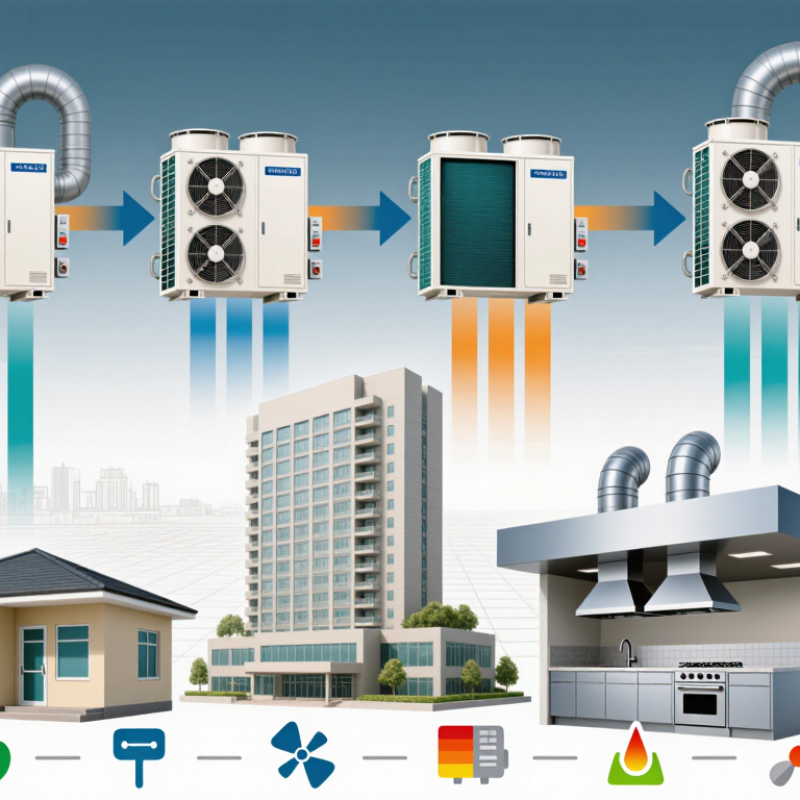
A combined air handling unit brings several air-treatment functions into one coordinated system. Depending on its configuration, it may mix outdoor and return air, filter it, adjust its temperature, and deliver it through ducts. Some units also include heat recovery or separate supply and extract fans. The exact arrangement matters; “combined” does not describe one universal design.
Inside the casing, filters catch particles, coils heat or cool the passing air, and fans maintain airflow. Controls respond to readings such as temperature and pressure. Small details count. A tightly loaded filter can reduce airflow and increase fan energy, while a poorly placed sensor may cause uneven room temperatures. When assessing a unit, check its airflow requirements, available space, noise limits, and access for filter and coil cleaning. Maintenance access is easy to overlook on a drawing. It becomes very real when a technician cannot remove a filter without dismantling nearby ductwork. Specifications also depend on the building’s climate and operating schedule, so a unit sized only from floor area may miss important loads.
A combined air handling unit (AHU) brings together components such as mixing dampers, filters, heating or cooling coils, and fans to condition and distribute air. The right configuration depends on the building, climate, ventilation requirements, and duct system.
| Selection factor | What to check | Why it matters | Practical guidance |
|---|---|---|---|
| Airflow | Required supply airflow and outdoor-air quantity, in m³/h or L/s | Determines unit capacity, duct sizing, and whether ventilation needs can be met. | Base airflow on room loads and applicable ventilation codes or standards; do not size from floor area alone. |
| Outdoor and return air | Required outdoor-air fraction, return-air availability, and mixing-damper arrangement | Affects indoor air quality, heating and cooling loads, and operating energy. | Confirm the minimum outdoor-air rate and operating sequence with the ventilation design and local requirements. |
| Heating and cooling duty | Design entering-air conditions, leaving-air targets, and required coil capacity | Coil performance depends on airflow, temperature, humidity, and the available heating or cooling medium. | Ask for coil selection at the project’s actual design conditions, not just a nominal capacity. |
| Fan and system pressure | Supply and return airflow, external static pressure, and pressure losses through unit components | The fan must overcome resistance in the AHU and connected ductwork while delivering the required airflow. | Check the fan selection against the full system pressure calculation, including filters, coils, and accessories. |
| Filtration | Required filter class, available filter stages, and clean-to-final filter pressure drop | Filtration affects indoor particle levels, fan energy, and maintenance frequency. | Choose filters for the application and applicable standards; allow access and space for replacement. |
| Heat recovery | Exhaust-air availability, operating hours, climate, and cross-contamination constraints | Heat recovery can transfer energy between exhaust and incoming outdoor air, reducing conditioning demand. | Evaluate recovery type, bypass needs, frost control, and separation requirements for the building use. |
| Humidity and condensate | Indoor humidity targets, humidification needs, cooling-coil condensate, and drain-pan arrangement | Humidity control affects comfort and some process requirements; cooling coils can produce condensate. | Include drainage, access, and freeze protection where relevant; specify humidification only when required by the design. |
| Controls and operating modes | Schedules, temperature control, damper operation, alarms, and building-management-system interface | Controls coordinate components and help the unit respond to changing occupancy and loads. | Define sequences of operation and required control points before selecting the final configuration. |
| Installation and maintenance | Available footprint, access clearances, lifting route, service side, and component replacement path | A unit that cannot be installed or serviced safely may cause delays and higher lifecycle costs. | Verify dimensions, access panels, filter removal space, and connection locations against the site layout. |
| Sound and efficiency | Sound data, fan power, motor and drive arrangement, and expected operating schedule | Noise can affect occupied spaces, while fan and coil performance influence ongoing energy use. | Compare selections at the required duty point and assess sound control and energy use for the intended operating hours. |
Final AHU selection should be checked by a qualified HVAC designer against project loads, ventilation rules, equipment schedules, and site conditions.
It can mix outdoor and return air, filter it, adjust its temperature, and move it through ducts. The exact setup varies.
Filters catch particles, coils heat or cool air, and fans maintain airflow. Controls respond to temperature and pressure readings.
Compare horizontal, vertical, and stacked layouts with the room’s space and service access. Measure doorways, too. Drawings can mislead.
They may capture smaller particles, but can increase pressure drop and fan energy. Check the filter’s suitability for the system.
Confirm airflow, heating and cooling capacity, duct routes, floor support, noise limits, and maintenance clearances. Details matter.
Technicians need room to remove filters and reach coils, fans, and controls. A nearby duct can turn a simple task into a difficult one.
Test airflow, controls, safety interlocks, and condensate drainage under operating conditions. Compare actual readings with design estimates.
Keep spare filters, label access panels, and check filters and drain pans regularly. Record maintenance dates and pressure drops.
Review it after the first season using measured performance and occupancy patterns. The log may be incomplete, but it can still reveal problems.
Choosing the right Combined AHU starts with understanding how it brings together air-handling functions to support indoor air quality and comfort. Begin by assessing the building’s size, occupancy, required airflow, and local climate-control demands. These factors help determine the capacity and configuration needed, including suitable filtration, heating or cooling, ventilation, and moisture-control components.
Compare available system layouts and component options, then review energy performance and compatibility with existing ductwork, controls, and other building systems. A well-matched unit should meet operational requirements without being unnecessarily complex or oversized. Before making a decision, consider installation access, routine servicing, replacement of filters and other parts, and the skills needed for ongoing operation. Taking these needs into account helps ensure the Combined AHU can perform reliably and remain practical to maintain throughout its service life.

