Precision-manufactured in our 12,000 m² Dezhou production base with CE compliance, strict dynamic balance calibration, and custom engineering options for worldwide EPC contractors.








How evolving thermodynamic heat dissipation demands, data center density, and strict decarbonization mandates are reshaping cooling tower propulsion systems across international markets.
Modern process industries, semiconductor foundries, and hyperscale artificial intelligence compute centers generate massive volumetric heat loads. Cooling tower fans must move upward of 800,000 m³/h per cell against demanding static pressure gradients without sacrificing dynamic stability or exceeding strict acoustic footprints.
The European Union EcoDesign Directive (ErP Regulation 327/2011 & upcoming 2029 revisions) mandates elevated target efficiency tiers ($FMEG \ge 68$) for motor-fan assemblies. Industrial operations are phasing out legacy stamped aluminum blades in favor of swept forward aerofoil composite rotors with variable-pitch hubs.
Marine cooling water loops, petrochemical off-gas scrubbers, and geothermal cooling towers expose fan stacks to aggressive sulfur dioxide, chlorine ions, and 100% relative humidity. Global engineering firms require certified anti-corrosive vinyl-ester FRP and marine-grade A356 aluminum constructions.
A detailed blueprint of harmonized standards, structural safety assessments, noise thresholds, and electro-mechanical integrity required for unhindered deployment across the European Single Market.
Under Directive 2006/42/EC, an industrial cooling tower fan is classified as complete or partly completed machinery. Compliance requires rigorous risk assessment via EN ISO 12100, fail-safe guard clearances according to EN ISO 13857, and blade burst containment simulations. The fan shroud and bell-mouth diffuser must withstand high-speed aerodynamic turbulence without harmonic flutter or mechanical contact under critical yaw loads.
For installations in proximity to commercial zoning or suburban perimeters, cooling tower fan companies must verify sound power levels ($L_w$) in accordance with ISO 3744 and ISO 13347. Engineering optimizations such as high-chord swept blades, scalloped trailing edges, and lower tip speeds (below 55 m/s) suppress vortex shedding noise while maintaining the required static pressure head.
| Directive / Directive Standard | Technical Scope & Target Components | Compliance Mandate & Verification Protocol | Engineering Benefit for EPC Buyers |
|---|---|---|---|
| 2006/42/EC (Machinery) EN ISO 12100 / EN 60204-1 |
Impeller rotor, hub structure, drive shaft, protective fan cowl | FEA stress verification, safety factor > 3.5, fail-safe emergency stop integration | Eliminates catastrophic mechanical disintegration risks during extreme wind gusts or surge |
| 2014/30/EU (EMC) EN 61000-6-2 / EN 61000-6-4 |
Inverter duty electric motors, VFD variable frequency controllers | Electromagnetic immunity & radiated emission thresholds in industrial environments | Prevents harmonic distortion and signal interference with distributed plant PLC controllers |
| 2014/34/EU (ATEX) EN 14986:2017 |
Fans operating in Zone 1 / Zone 2 explosive gaseous atmospheres | Non-sparking bronze track liners, anti-static carbonaceous blade skins (< 10⁹ Ω) | Mandatory clearance for petrochemical refineries, LNG terminals, and offshore platforms |
| ISO 1940-1 Balance Grade Grade G2.5 / G6.3 |
Complete assembled blade rotor and drive hub assembly | Two-plane dynamic dynamic balance testing in dedicated test cell | Dramatically reduces bearing vibration, extending drive gearbox MTBF beyond 60,000 hours |
Shandong Fengdun Environmental Technology Co., Ltd. leverages the unmatched supply-chain density of China's premier industrial ventilation capital to deliver uncompromised quality at factory-direct scale.
Within a 30-kilometer perimeter of our Dezhou facility lies a complete matrix of raw material and precision sub-tier suppliers: cold-rolled galvanized sheet, high-purity aluminum smelting, precision investment casting, motor stator winding, and specialized FRP pultrusion lines. This eliminates logistical bottlenecks and reduces procurement cycle times by over 45% compared to Western counterparts.
Our 12,000 m² infrastructure houses high-power fiber laser cutting centers, hydraulic CNC bending presses, robotic seam welding stations for water tanks and casing, vacuum-assisted resin transfer molding (VARTM) for FRP composite fan blades, and full-spectrum dynamic balancing test stands ensuring ISO 9001 and CE conformity.
Situated adjacent to high-speed arteries, the Beijing-Kowloon transit corridor, and near Qingdao and Tianjin deepwater ports, our shipments clear customs with maximum velocity. Whether packaging knockdown modular counterflow towers, long-span axial fan impellers, or modular stainless steel tanks, ocean freight container loading is optimized to protect high-precision blade surfaces.
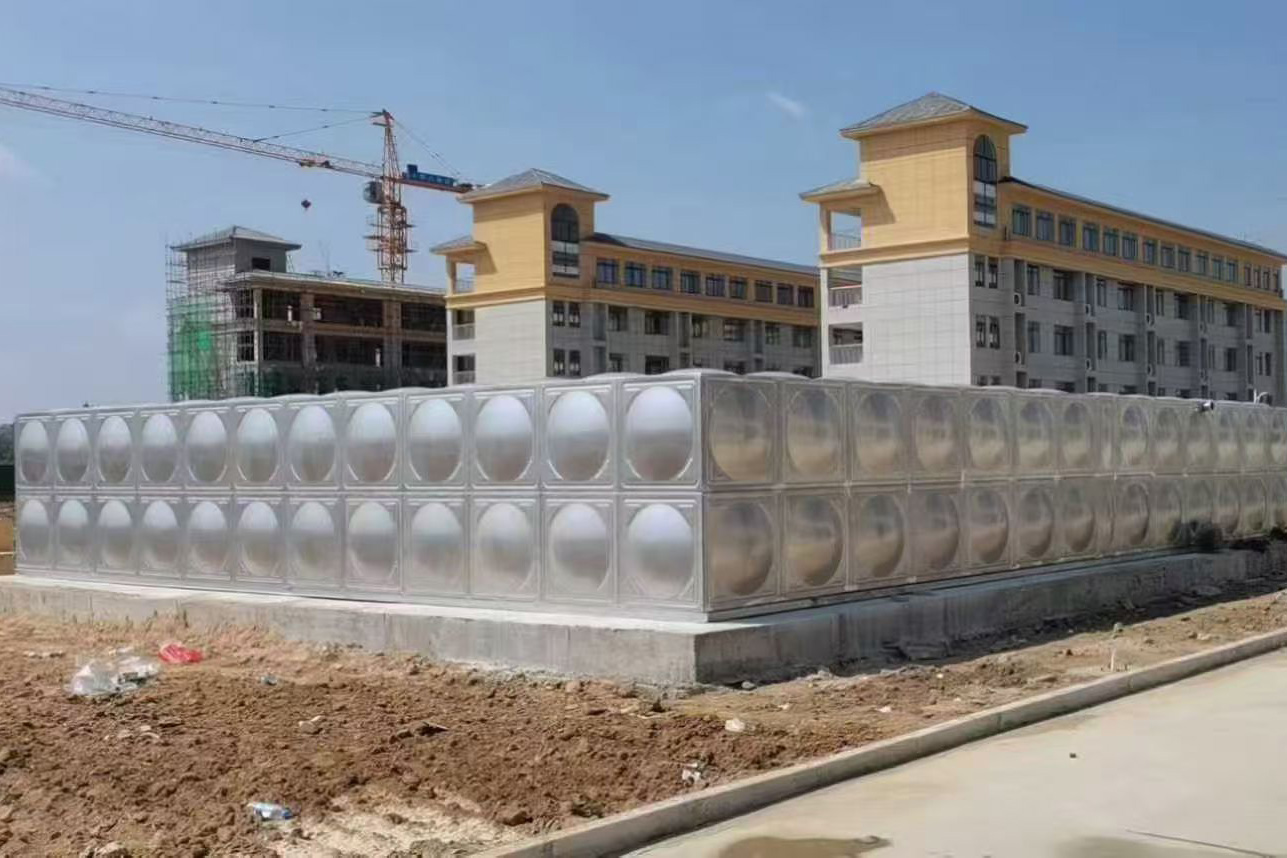
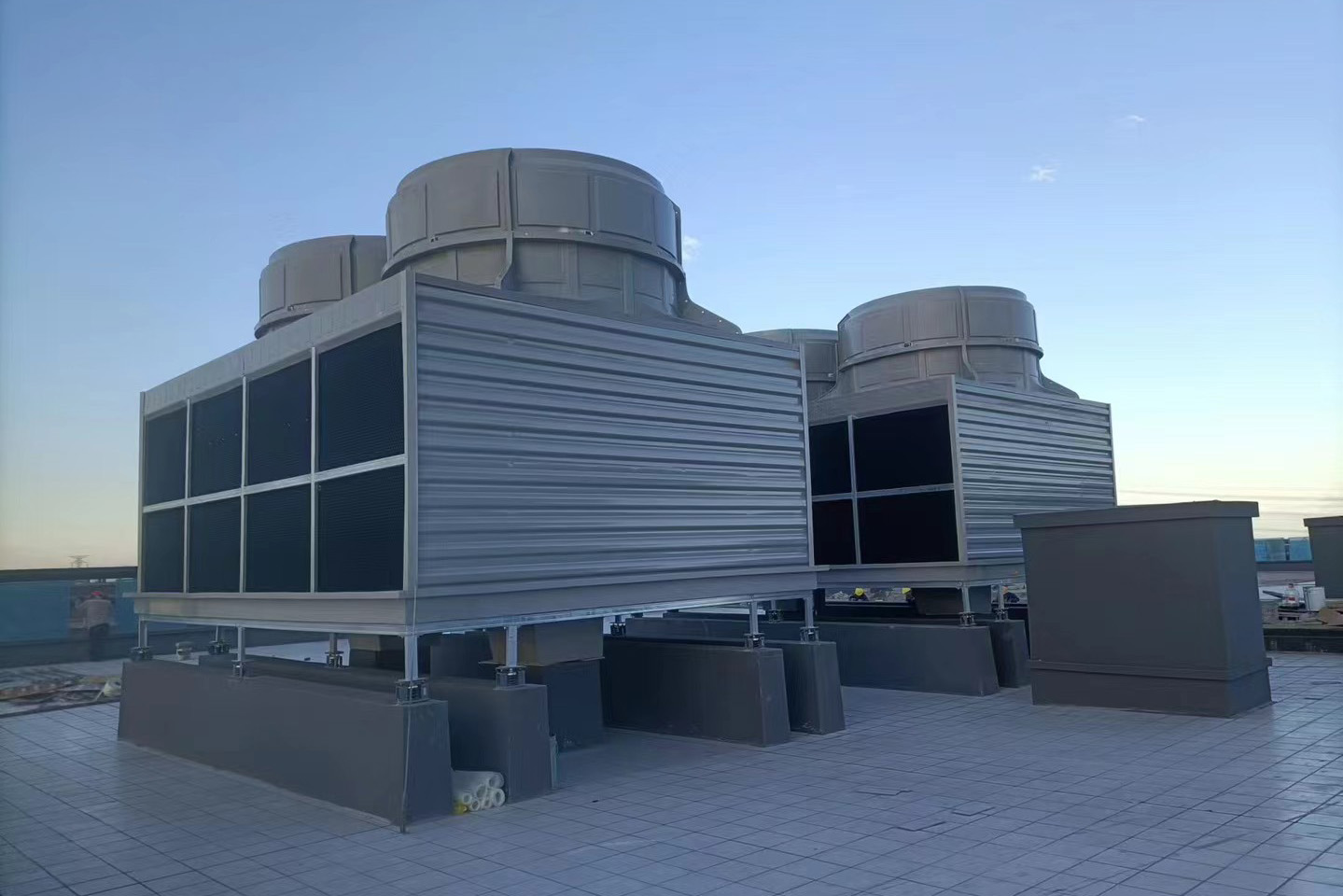
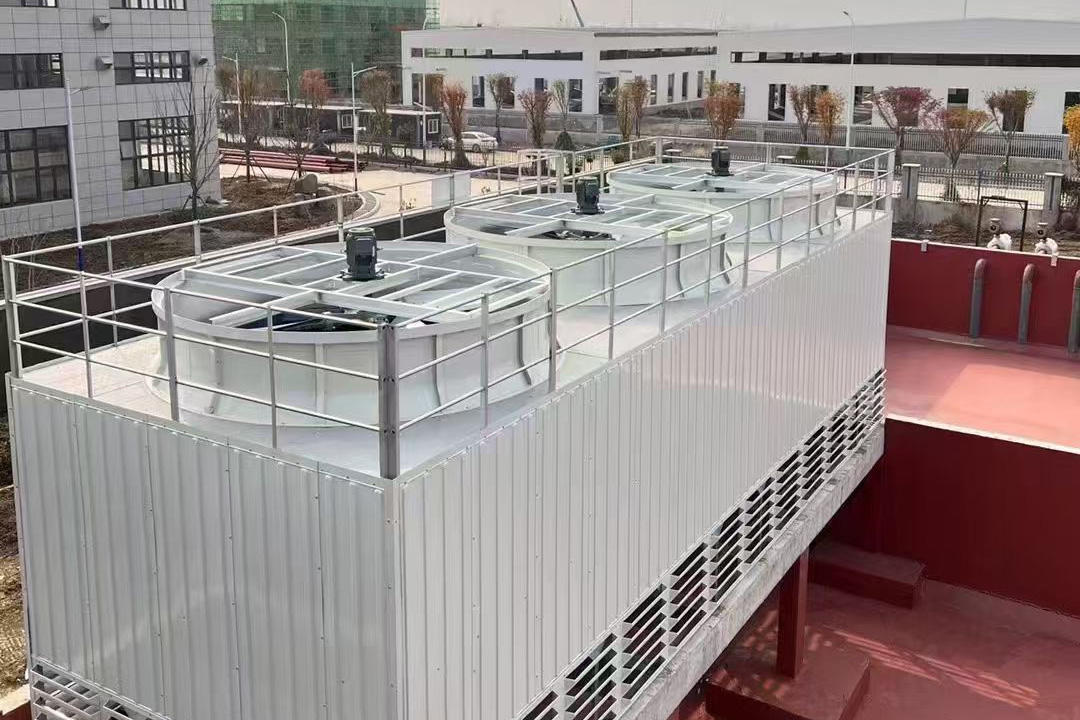
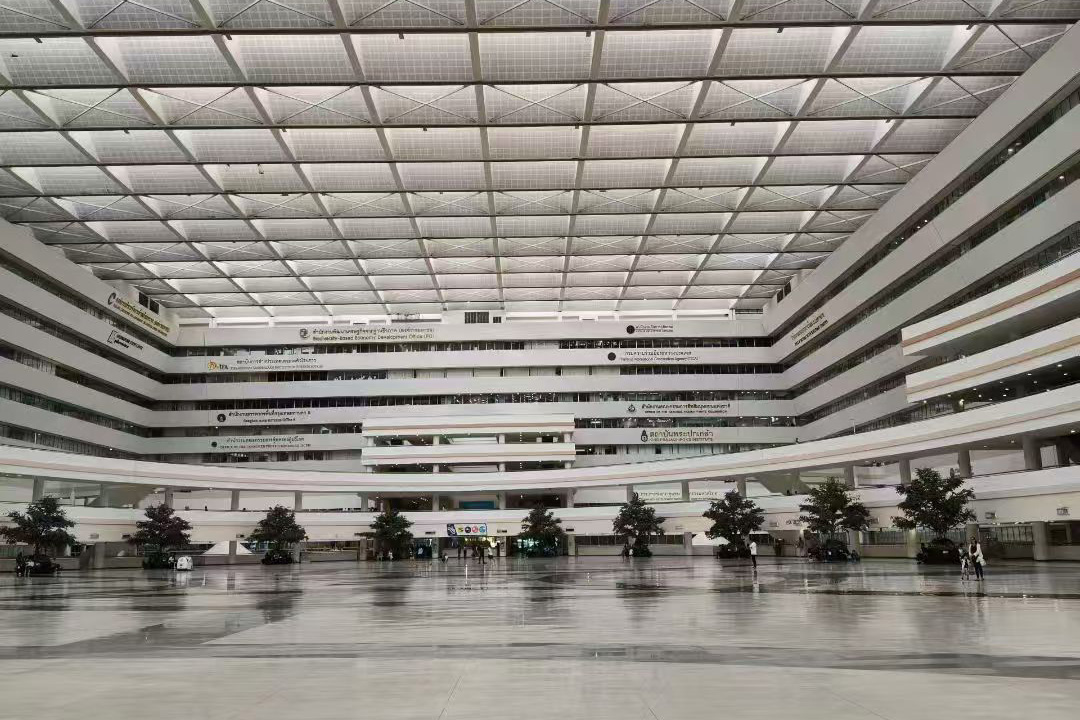
From thermal stress mitigation in heavy metallurgy to extreme moisture containment in tropical EPC water engineering, examine how Fengdun systems perform under actual field constraints.
In high-density server parks, cooling towers operate 8,760 hours annually. Fan assemblies utilize ultra-low-noise airfoils paired with direct-drive EC or IE5 permanent magnet synchronous motors (PMSM) to ensure strict compliance with nighttime acoustic decibel regulations and optimize PUE.
Petroleum and natural gas distillation loops require heavy-duty ATEX-certified fan hubs. Non-corrosive FRP blades resist sulfuric mist, caustic condensate, and elevated cooling fluid discharge temperatures, ensuring zero degradation over multi-year turnarounds.
Medium-frequency induction melting furnaces demand clean, closed-circuit cooling to eliminate scaling inside copper coil passages. High-efficiency counterflow fan stacks drive massive air draft through enclosed heat exchanger bundles with tight thermal approach deltas.
In high wet-bulb regions like Thailand, Vietnam, and Indonesia, ambient air limits cooling capacity. Our high-flow axial fans maximize evaporative boundary-layer transition, supported by rugged hot-dip galvanized and FRP tower structures resistant to monsoonal humidity.
How computational fluid dynamics (CFD), advanced resin polymers, and intelligent predictive drive monitoring are raising lifecycle ROI for plant operators.
Drawing from avian wingtip vortex control, next-generation axial impellers incorporate slotted tips, variable twist angles, and high-aspect NACA 65 airfoils. These geometric evolutions reduce blade tip turbulence, suppressing high-frequency acoustic hiss and boosting total pressure efficiency by up to 8.4%.
For tower diameters exceeding 7.3 meters (24 feet), standard aluminum impellers place high inertial stress on mechanical reduction gearboxes. By infusing carbon fiber tow into vinyl-ester fiberglass matrixes, rotor mass is slashed by 40%, decreasing starting torque loads and prolonging bearing service life.
Modern CE-certified cooling tower fans feature integrated tri-axial vibration accelerometers and thermal bearing sensors conforming to ISO 10816-3. Continuous telemetry streams via Modbus/BACnet to the plant DCS, detecting blade imbalance or bearing race spalling before costly failures occur.
A five-stage technical procurement checklist designed to prevent sizing inaccuracies, ensure complete regulatory conformity, and accelerate factory-to-site commissioning.
Determine exact water circulation flow rate ($m^3/h$), hot water inlet, cold water outlet, and the maximum local ambient wet-bulb temperature ($T_{wb}$) from ASHRAE meteorological tables to establish the design approach gradient.
Sum drift eliminator resistance, fill packing aerodynamic drop, water distribution spray pressure, and louver intake loss to size the fan static pressure ($P_s$) head accurately, preventing air stall or motor cavitation.
Choose between corrosion-proof hand layup / pultruded FRP, marine aluminum A356, or 304/316 stainless steel based on water salinity, chemical biocide regimens, and atmospheric exposure factors.
Verify site power supply (380V/400V/440V/480V at 50Hz or 60Hz), motor energy efficiency class (IE3, IE4, or PMSM IE5), IP55/IP66 enclosure protection, Class H insulation, and inverter-duty capability for VFD throttling.
Require dynamic balance certificates (ISO 1940-1 Grade G2.5), Declaration of Conformity under 2006/42/EC, full EN 10204 3.1 material test reports, and optional third-party witness inspection by SGS, BV, or TÜV prior to sea container packing.
Engineering Direct Line: Shandong Fengdun provides direct peer-to-peer technical consultation between overseas project managers and in-house mechanical aerodynamicists, eliminating intermediary misinterpretations.
Explore our full line of specialized industrial fan assemblies, fire-safe ventilation dampers, and engineered containment tanks manufactured to international standards.


Authoritative insights compiled by Fengdun's chief mechanical engineers to assist procurement directors, consulting engineers, and plant operators.
Full CE compliance requires an official EU Declaration of Conformity (DoC) referencing the Machinery Directive 2006/42/EC (or the forthcoming EU Machinery Regulation 2023/1230), the Electromagnetic Compatibility Directive 2014/30/EU, and, when applicable, the ATEX Directive 2014/34/EU. The manufacturer must maintain an internal Technical Construction File (TCF) containing risk assessments under EN ISO 12100, dynamic stress and finite element analyses (FEA), acoustic noise calculations (ISO 3744), and third-party motor test certificates.
Cooling tower axial fans are engineered with adjustable-pitch hubs (manual or automatic variable pitch). Increasing the blade pitch angle increases aerodynamic lift, raising airflow volume ($CFM$ or $m^3/h$) and static pressure capability. However, brake horsepower ($BHP$) scales cubically with airflow. Our engineering datasheet provides precise pitch-versus-ampere curves so commissioning technicians can dial in thermal requirements without exceeding motor nameplate service factors.
Open counterflow cooling towers maximize air-water contact over PVC film fill and offer lower initial capital expenditure, making them ideal for standard commercial HVAC chillers. Closed circuit cooling towers circulate process fluid within a hermetically sealed copper or stainless steel heat exchange coil, completely shielding the loop from atmospheric dust, airborne particulates, and scale. This makes closed towers mandatory for induction furnaces, cleanroom chillers, and critical chemical reactors.
All Fengdun industrial impellers undergo two-plane dynamic balancing according to ISO 1940-1 Grade G2.5 (surpassing the standard commercial grade G6.3). This rigid protocol restricts residual unbalance to negligible levels, ensuring vibration velocity remains below 2.8 mm/s RMS under operational load (ISO 10816-3 Class I/II limits), protecting the fan stack, reduction gearbox, and structural frame from fatigue failure.
Operating from our 12,000 m² factory in Dezhou with 280+ personnel, we operate an ISO 9001 certified production matrix. In-house processes include spectrometer raw material verification, laser CNC cutting, automated continuous welding, hydrostatic pressure testing for water tanks, and aerodynamic run-testing for axial and mixed-flow fans. All critical items are tracked with unique serial numbers linked to full mill test and QC inspection records.
Direct-drive Permanent Magnet Synchronous Motors (PMSM) eliminate mechanical gearboxes, drive shafts, flexible couplings, and belt systems. This removes gear transmission losses (delivering 10%–15% operational energy savings at partial loads), eliminates oil changes, and drastically reduces acoustic vibration. Fengdun supplies both direct-drive PMSM solutions and traditional right-angle spiral bevel gearbox drive trains based on client project budgets.
Yes. We regularly supply motors wound for 220V, 380V, 400V, 415V, 440V, 460V, and 480V systems across both 50Hz and 60Hz grids. Motors can be specified with multi-mount frames, dual-speed windings for seasonal load adjustment, or inverter-grade insulation (Class H, non-hygroscopic) capable of handling high voltage rise times ($dV/dt$) generated by modern VFD controllers.
Share your project drawings, thermal parameters, or airflow requirements. Shandong Fengdun provides complete technical proposals, dimensional CAD blueprints, and export pricing within 24 business hours.
