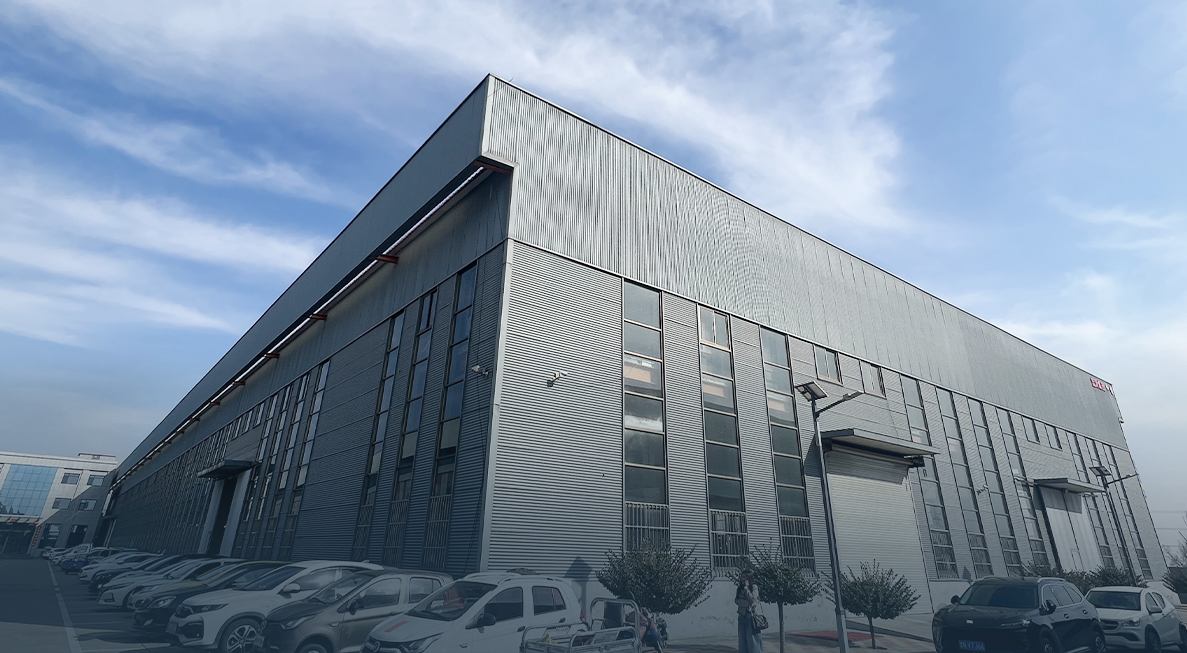
Precision-manufactured across our 12,000 m² automated production facility in Dezhou, China. Explore core industrial equipment built to international safety directives.
In modern fluid networks—spanning pressurized municipal potable water boosting, closed-circuit district HVAC hydronics, industrial clean-in-place (CIP) loops, and commercial fire suppression risers—water pressure vessels operate as the primary hydraulic buffer. Under European Union Pressure Equipment Directive (PED 2014/68/EU), CE-marked stainless steel pressure tanks are rigorously certified to guarantee zero catastrophic rupture, strict elastomeric membrane isolation, and chemical longevity.
Conformity under Module B (production type examination) plus Module D/H quality assurance ensures pressure containment shells undergo rigorous finite element stress analysis (FEA), verified burst testing, and third-party welding qualification.
Austenitic stainless steels are chemically passivated and electropolished to maintain zero bio-film accumulation, preventing corrosion from chloramines in potable water and resisting aggressive condensates in high-temperature heating.
Engineered with replaceable or fixed virgin butyl/EPDM diaphragms, our expansion vessels dissipate transient pressure waves, absorbing pump kick-back and preventing thermal expansion damage across closed mechanical distribution pipework.
Dezhou, situated in Shandong Province, serves as the global ground-zero for industrial HVAC and pressure containment fabrication. Shandong Fengdun Environmental Technology Co., Ltd. capitalizes on this unique localized industrial ecosystem to deliver uncompromised quality, short lead times, and factory-direct pricing without distributor margins.
Direct supply contracts with top-tier domestic stainless mills (TISCO, Baosteel) guarantee mill-certified SUS304, SUS316L, and 2205 Duplex plate with trace elements strictly verified via spectrometer.
Continuous longitudinal and circumferential seams are fabricated using robotic plasma-arc and TIG welding under pure argon backing, preventing chromium carbide precipitation and intergranular corrosion.
Every CE-marked tank undergoes pressurized hydrostatic water testing up to 1.5× design pressure (holding minimum 30 minutes) alongside helium mass spectrometer or pneumatic decay leak verification.
Direct connectivity to Qingdao and Tianjin deep-water container terminals allows rapid dispatch via 20GP, 40HQ, and open-top flat racks, providing global project contractors with predictable arrival milestones.
Unlike small workshops utilizing segmented welding, our 12,000 m² factory employs 1,500-ton hydraulic presses to form seamless elliptical and torispherical heads (ASME F&D type). This cold-forming process eliminates structural weak points, ensuring maximum fatigue resistance over millions of dynamic pressurization and decompression cycles in constant-pressure booster skids.
When specifying pressure retention equipment for mission-critical mechanical rooms, consulting engineers evaluate thermodynamic stability, oxygen permeation, corrosion indices, and total lifecycle maintenance expenses.
| Evaluation Parameter | CE Stainless Steel (SUS304 / 316L) | Epoxy-Coated Carbon Steel | FRP / Composite Pressure Vessels |
|---|---|---|---|
| Corrosion Resistance | Exceptional; self-healing chromium oxide film; impervious to chloramines and soft-water aggressive pitting. | Moderate; highly dependent on internal lining thickness; susceptible to pinhole blistering & under-film rust. | High chemical inertness, but susceptible to structural micro-cracking and thread fatigue over repeated surges. |
| Sanitary & Potable Suitability | WRAS, NSF/ANSI 61, and CE hygienic compliant. Zero organic volatile leaching, zero bacterial biofilm anchorage. | Requires specialized food-grade baked epoxy; potential degradation under chemical chlorination flushing. | Resin components may exhibit microscopic styrene leaching under elevated thermal cycles. |
| Design Pressure Capability | Standard PN10, PN16, PN25; custom engineered up to 4.0 MPa (40 bar) with high mechanical tensile integrity. | Standard PN10, PN16; heavier shell thickness required to compensate for expected corrosion allowance. | Primarily PN6 to PN10; mechanical strength deteriorates significantly above 45°C media temperatures. |
| Thermal Operating Window | -20°C to +130°C continuously; accommodates extreme solar thermal, district heating, and cryogenic fluids. | -10°C to +90°C; thermal shock can crack rigid internal coatings, exposing raw metal to moisture. | Limited to 1°C to +50°C; mechanical matrix degrades rapidly under prolonged thermal exposure. |
| Expected Service Lifespan | 25 to 30+ Years with periodic elastomer bladder inspection; 100% recyclable vessel hull. | 8 to 12 Years before internal flaking or vessel wall thinning forces full replacement. | 10 to 15 Years; irreversible composite fatigue from hydraulic shock waves and cyclic loading. |
Driven by smart building automation, low-carbon district heating initiatives, and rigorous international energy codes, the pressure vessel landscape is shifting from passive surge damping to smart, digitally integrated assets.
Modern pressure tanks incorporate continuous internal gas-cushion monitoring. Wireless piezoresistive sensors detect pre-charge pressure drops or diaphragm rupture early, transmitting telemetry via RS-485 Modbus or LoRaWAN to centralized Building Management Systems (BMS).
While traditional EPDM diaphragms handle up to 90°C, the industry transition toward high-temperature polyurethane (PU) and fluoropolymer elastomers enables continuous handling of high-temperature glycol up to 130°C without gas diffusion or membrane embrittlement.
For critical infrastructure in active seismic zones (Eurocode 8 / ASCE 7-16), vessel skids and gusseted saddle brackets are engineered to resist high shear and overturning moments, maintaining operational pressure containment through major seismic events.
From municipal clean-water booster substations to complex pharmaceutical manufacturing, our CE-certified stainless steel pressure tanks deliver mission-critical hydraulic stability.
Prevents destructive pump cycling on vertical zones. Tanks maintain constant supply pressure during peak demand hours, minimizing pump starts per hour and extending VFD motor longevity.
Installed alongside variable-speed distribution pumps to mitigate severe Joukowsky water hammer waves created during sudden power failures or quick-closing motorized check valves.
Accommodates thermal fluid expansion and contraction in closed chiller and boiler circuits. The nitrogen pre-charge prevents cavitation in circulation pump suctions by maintaining positive net positive suction head (NPSH).
Maintains static pressure in dedicated NFPA 20 sprinkler standpipe systems, cushioning minor system seepage and ensuring main diesel fire pumps do not trigger nuisance starts.
International consulting engineers require end-to-end documentation transparency. Fengdun adheres to stringent quality dossiers conforming to European PED and international EPC contractor standards.
Complete metallurgical test certificates accompany all stainless pressure shells, detailing heat numbers, chemical melt composition, tensile yield properties, and Charpy V-notch impact test values.
We routinely accommodate third-party factory acceptance testing (FAT) witness holds conducted by SGS, Bureau Veritas (BV), and TÜV Rheinland, including pneumatic safety valve popping tests and shell radiography review.
Vessels are nitrogen pre-charged to positive pressure, fitted with impact caps, and secured within moisture-barrier heat-shrink foil inside fumigated plywood crating or heavy-duty steel skid mounts for ocean freight.
Direct answers to the most common queries submitted by mechanical specifying engineers, MEP consultants, and international project procurement managers.
All products are manufactured under ISO 9001 quality management, backed by factory testing certificates, technical CAD support, and direct engineer-to-engineer export consultations.










