Factory-direct structural assets fabricated under certified ISO 9001 quality matrices at our 12,000 m² production base in Dezhou, Shandong, China.








An exhaustive operational blueprint addressing municipal stormwater attenuation, dedicated fire emergency reserves, industrial closed-loop cooling reservoirs, and composite subterranean installations.
The engineering landscape of China Concrete Underground Water Storage Tanks Companies has evolved from traditional cast-in-place concrete basins to modular precast, post-tensioned, and composite subterranean containment vessels. In dense metropolitan zones, industrial complexes, and critical fire-safety installations, underground water retention frees up 100% of above-ground footprint for infrastructure, logistics, or architectural landscaping. However, subterranean containment introduces complex geotechnical dynamics that demand rigorous structural engineering. The primary engineering failure mode in high water-table environments is hydrodynamic floatation. Our engineering teams at Shandong Fengdun Environmental Technology Co., Ltd. employ precise buoyancy equilibrium formulas ensuring a global factor of safety against uplift (FOSuplift ≥ 1.25 to 1.5 under maximum design flood conditions).
To counteract buoyant forces, our precast and composite concrete containment configurations utilize extended footing ballast ledges (anti-flotation heels), subterranean deadman friction micro-piles, and calibrated topsoil surcharge overburden calculations. For projects with variable soil bearing capacities ranging from 80 kPa to 250 kPa, finite element modeling (FEM) is utilized to simulate differential soil settlement, lateral dynamic earth pressures according to the Mononobe-Okabe method for seismic conditions, and hydrostatic loads exerted during simultaneous internal drawdown and saturated soil conditions.
Constructed to withstand Eurocode 8 and GB50011 seismic performance standards, utilizing ductile shear keys, rebar overlap couplers, and high-frequency vibrated C35/C40 concrete with low water-cement ratios.
Infused with crystalline capillary waterproofing admixtures, swelling hydrophilic water-stops at construction joints, and dual-layer polyurethane elastomeric membranes yielding zero hydraulic transmission.
Unified integration with buried fire pump packages, internal anti-vortex baffles, suction diffusers, flow-split walls, and automated ventilation fans ensuring continuous operational readiness.
Evaluating lifecycle durability, installation cycle times, seismic resistance, and chemical reactivity for heavy infrastructure procurement.
| Evaluation Parameter | Monolithic Cast-in-Place Concrete | Precast Modular Concrete Tanks | Buried BDF Composite (Steel/FRP/Concrete) | Welded SUS304 / SUS316 Tanks |
|---|---|---|---|---|
| Design Service Life | 50 – 70 Years | 60 – 80 Years | 30 – 50 Years | 25 – 40 Years |
| Installation Velocity | Slow (45 - 90 Days curing) | Rapid (7 - 14 Days modular) | Ultra-Rapid (5 - 10 Days) | Moderate (10 - 20 Days on pad) |
| Anti-Buoyancy Capability | Exceptional (High dead-weight) | High (Engineered heel ballast) | Moderate (Requires soil load calculations) | Requires concrete anchoring cradle |
| Overburden Soil Tolerance | Up to 4.5m + HS-20 Vehicle Loading | Up to 3.5m + Heavy Traffic load | Up to 2.0m standard (Reinforced to 3m) | Rooftop or Shallow burial vaulted |
| Internal Biological Leaching | Requires food-grade epoxy lining | Factory applied silica barrier | Non-toxic composite boundary | Zero leaching (Food-grade sanitary) |
| Initial Capital Expenditure (CapEx) | High on-site labor cost | Optimized factory prefabrication | Highly cost-effective | Material driven (Nickel/Moly market) |
A significant technological leap spearheaded by leading Chinese manufacturers is the BDF (Buried Deep Foundation) composite underground water storage tank. BDF architecture unites the compressive performance of reinforced concrete with the hydraulic impermeability and tensile endurance of high-grade composite steel plates. Instead of erecting temporary timber formwork, stainless steel or hot-dip galvanized composite panels serve as permanent interior fluid formwork. High-strength self-compacting concrete (SCC) is then cast into structural internal columns and external perimeter haunches.
This hybrid approach eliminates internal micro-fractures commonly caused by thermal expansion during mass concrete curing. The interior metallic face (SUS304 or sintered porcelain enamel) completely prevents lime leaching, algae colonization, and biofilm buildup, making the installation compliant with strict municipal drinking water guidelines while providing heavy vehicle load support (Class 40 fire truck traversable) on the surface grade.
Navigating structural decarbonization, IoT-enabled hydrodynamic monitoring, and ultra-high-durability basalt fiber reinforcements.
Phasing in blast-furnace slag and fly-ash activated geopolymer binders to replace Portland cement, cutting embedded carbon footprints by up to 58% per cubic meter while amplifying acid and sulfate resistance in contaminated soils.
Delivering native Autodesk Revit / IFC 3D parametric structural files with integrated fluidic simulation (CFD) for stagnation modeling, vortex prevention, and turnkey MEP alignment with underground pumping plant rooms.
Embedded piezoresistive fiber-optic strains, groundwater level transducers, real-time ultrasonic sediment thickness alerts, and cathodic protection monitors delivering autonomous health telemetry via Modbus/BACnet.
Replacing traditional carbon steel reinforcing bars with Basalt Fiber Reinforced Polymers (BFRP). Immune to chloride ion pitting, stray electrical currents, and groundwater acidic degradation, securing an 80+ year design horizon.
Tailored subterranean containment architectures meeting specific thermodynamic, hydraulic, and regulatory challenges.
Underground thermal storage sumps and closed cooling tower balance cisterns. Acts as an emergency heatsink buffer guaranteeing unbroken Tier III/IV continuous runtime during sudden chillers or power disruptions.
Engineered in compliance with NFPA 22 and GB50974. Integrates dedicated suction wells, anti-vortex plates, fire-resistance rated smoke exhaust shafts, and integrated buried pressurization pumps.
Subterranean buffer basins handling high-temperature quench cycles and corrosive cooling loop blowdown. Utilizes SUS316 composite liners and high-temperature elastomeric expansion joints.
Situated in Dezhou, Shandong Province, Shandong Fengdun Environmental Technology Co., Ltd. leverages the world's most concentrated industrial supply chain for HVAC, ventilation, and structural water storage equipment. Unlike trading intermediaries, we execute end-to-end metallurgical processing: heavy CNC stamping, submerged arc welding, specialized sintered enamel vitreous coatings, and precision sheet metal fabrication for ventilation fire dampers and high-temperature smoke extract fans.
Because underground water storage tanks directly interface with building HVAC cooling circuits and fire protection risers, sourcing both the reservoir and the fluid movement / ventilation hardware under one roof eliminates mechanical interface mismatches, accelerates EPC submittals, and substantially lowers freight consolidations.
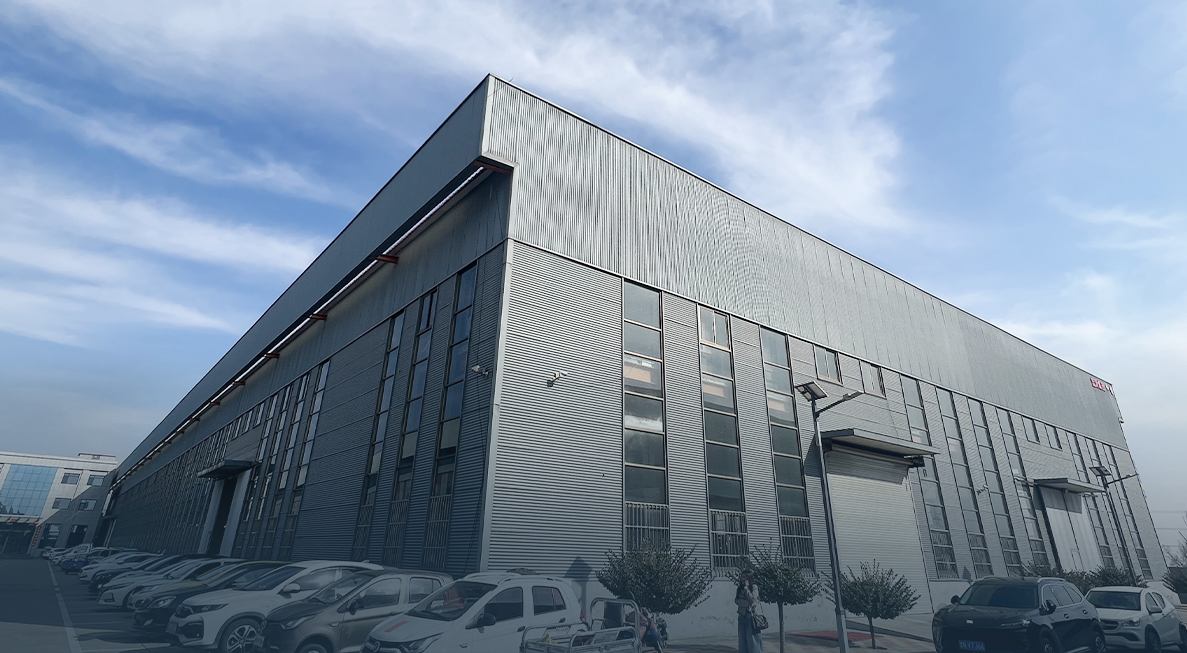
How advanced robotic stamping, tight metallurgical tolerances, and direct port corridors deliver unmatched turnaround times for overseas mega-projects.
Our factory utilizes fully automated 1000-ton hydraulic presses that form standard 1000x1000mm, 1000x500mm, and 2000x1000mm modular containment plates with deep spherical stiffening ribs, maximizing load bearing capacity while decreasing steel consumption.
Every structural water tank section undergoes comprehensive non-destructive examination (NDE), including radiographic weld checks, hydrostatic helium bubble leak testing, and paint thickness coating spectrometry prior to international packing.
Strategically located within direct proximity to Qingdao and Tianjin deep-water international ports. Modular components are nested in reinforced anti-abrasion sea crates or open-top flat racks, reducing marine shipping volume by up to 60% compared to pre-assembled tanks.
Harmonizing international construction codes, environmental compliance, and standardized tender documentation.
Products engineered and certified to satisfy NFPA 22 (Water Tanks for Private Fire Protection), AWWA D110 / D115 (Wire-Wound & Precast Concrete Water Tanks), EN 1508 (Water supply storage systems), and AS/NZS 3500 plumbing and drainage mandates.
Routine compliance inspections executed alongside Bureau Veritas (BV), SGS, and TÜV Rheinland. Full material test reports (MTRs 3.1), weld penetration certificates, and tensile fracture test logs accompany every export consignment.
Multilingual field engineering teams available for remote telemetry assembly supervision or on-site deployment across Southeast Asia, the Middle East, Central Asia, and Latin American infrastructure projects.
Precise answers addressing structural engineering, procurement lead times, seismic tolerances, and installation protocols.
Traditional cast-in-place concrete reservoirs suffer from prolonged site construction times (often 60 to 120 days of formwork, rebar tying, and curing), high on-site labor vulnerability, and unpredictable micro-cracking caused by ambient weather conditions during pouring. China's precast concrete and BDF composite systems are prefabricated in climate-controlled factory environments with micron-level tolerances. Installation can be completed in days rather than months, saving substantial on-site labor costs while eliminating hydraulic permeability through industrialized crystalline additives and high-tensile composite liners.
Anti-buoyancy design begins with geotechnical assessment of the 100-year design flood level. Our engineers calculate the upward buoyant force: Fbuoyant = γwater × Vdisplaced. To achieve a Factor of Safety against uplift of ≥1.3 to 1.5, we implement three structural layers: (1) Outward-projecting bottom slab heel flanges that engage the deadweight of the soil backfill column above; (2) Mechanical tie-down ground anchors drilled into bedrock or underlying consolidated clay; and (3) Calibrated minimum concrete ballast deadweight integrated into the precast foundation slab.
Pure precast concrete relies solely on reinforced concrete panel segments sealed with polyurethane elastomeric gaskets or post-tensioned cables. BDF (Buried Deep Foundation) composite tanks combine an interior high-grade metallic sheet (SUS304, SUS316, or sintered porcelain enamel) with hot-dip galvanized structural steel backing and poured internal concrete pillars. BDF combines absolute sanitary water contact with the high compressive resilience of concrete, offering superior flexibility for custom dimensional constraints in tight subterranean basements.
Yes. Every export project undergoes tailored structural load engineering. For vehicular loading, we design top slabs to support standard HS-20, HS-25, or Eurocode LM1 live load specifications (allowing emergency fire trucks and heavy delivery vehicles to park or drive directly above the buried tank). For seismic activity, ductile moment-resisting connections, flexible pipe penetrations (rocker pipes and flexible mechanical couplings), and sloshing wave hydrodynamic surge calculations (Housner's model) are incorporated.
To deliver an optimized quotation, we require: (1) Storage volume capacity in cubic meters or US gallons; (2) Fluid composition (potable water, untreated stormwater, municipal sewage, cooling loop process water); (3) Site geotechnical borehole data (soil bearing capacity, maximum seasonal water table elevation); (4) Top overburden soil depth and surface live-load requirements (pedestrian landscaping vs. fire engine traffic); and (5) Required international compliance codes (NFPA, AWWA, EN, or local standards).
Browse our full range of cooling towers, smoke extraction fans, and modular tanks designed for turnkey building lifecycle operations.


Whether you require finite element anti-buoyancy analysis, seismic load estimations, BDF composite panel schedules, or high-capacity HVAC fire ventilation fan integration, our senior design engineers deliver comprehensive datasheets within 24 hours.
