

Precision-manufactured in Dezhou, Shandong. Fully compliant with international flow velocity, structural rigidity, and heat rejection specifications.







Navigating stringent water stewardship policies, fluctuating thermal loads, and the transition toward low-approach evaporative heat rejection infrastructure.
Modern evaporative heat transfer engineering focuses heavily on reducing the "Approach" (the delta between cooled water temperature and entering wet-bulb temperature). By integrating high-density PVC/PP honeycomb fill packs, Fengdun counterflow cooling towers achieve design approaches under 3°C to 4°C, drastically lowering the operating condensing temperature of primary chiller compressors.
Atmospheric evaporation inevitably induces mechanical drift losses. Advanced cellular drift eliminators engineered with multi-pass sine-wave geometry ensure drift loss rates below 0.001% of circulating water volume, satisfying strict ecological criteria (such as Singapore NEA, US EPA, and Eurovent) while eliminating local airborne particulate dispersion.
Selection between pultruded Fiber-Reinforced Polymer (FRP) and heavy-gauge Hot-Dip Galvanized (HDG) structural steel requires careful evaluation of ambient chloride levels, sulfate exposure, and process fluid temperatures. Fengdun supplies vinyl-ester composite shells for acidic/coastal atmospheres and heavy zinc-coat steel (Z720) for rapid mechanical installation.
Understanding Total Cost of Ownership (TCO), fouling resistance, maintenance complexity, and long-term thermodynamic performance trade-offs for EPC contractors.
| Evaluation Parameter | Industrial Square Counterflow (Open Loop) | Custom Closed Circuit Cooling Tower | Impact on Plant OPEX / CAPEX |
|---|---|---|---|
| Thermodynamic Mechanism | Direct liquid-to-air evaporative film contact over cross-fluted PVC/PP media. | Indirect sensible heat transfer via submerged coil bundle with secondary spray loop. | Closed circuit prevents scale fouling on delicate heat exchangers (e.g. induction coils). |
| Initial Capital Expenditure (CAPEX) | Moderate. Lower structural weight and simplified piping requirements. | Higher. Incorporates SUS304 / T2 Red Copper serpentines and auxiliary spray pumps. | Open loop provides fast ROI (12-18 mos) for standard commercial and municipal HVAC chillers. |
| Process Fluid Purity | Exposed to atmospheric airborne dust, bio-growth, and airborne sulfur/nitrates. | Completely isolated inside hermetic tube bundle; ZERO contamination risk. | Closed loop reduces chemical descaling frequency in furnace jackets by up to 90%. |
| Water Consumption Rate | Standard evaporative loss + blowdown dependent on Cycles of Concentration (CoC). | Dry-operation capable during winter/low ambient periods; zero fluid evaporation. | Closed system saves millions of liters in cold/arid regions via dry-mode switching. |
| Structural Footprint & Weight | Compact vertical footprint; optimal airflow-to-area volumetric ratio. | Heavier operating weight due to water volume inside internal heat exchanger coils. | Open counterflow allows lighter structural rooftop grillage engineering. |
| Typical Process Applications | Central Chilled Water Stations, Chemical Hydrocarbon Condensers, Mining Scrubbers. | Induction Melting Furnaces, Polysilicon Reactors, Data Center Liquid Loops. | Precision equipment demands closed loop to avoid localized hot-spots caused by scaling. |
Shandong Fengdun delivers turnkey, cross-integrated ventilation, fluid storage, and thermal rejection architectures across mission-critical sectors.
Integrating customized closed circuit cooling towers with plate frame heat exchangers for economizer (free-cooling) modes. When ambient wet-bulb temperatures drop below 10°C, mechanical chillers bypass completely, rejecting IT rack heat directly to atmosphere and bringing annual Power Usage Effectiveness (PUE) below 1.15.
Handling aggressive volatile organic compound (VOC) vapors and corrosive airborne chlorides. Features flame-retardant vinyl ester resin shells, explosion-proof ExdIICT4 motor assemblies, and heavy-duty 316L stainless steel spray distribution manifolds engineered to resist pitting and stress-corrosion cracking.
An integrated package combining ultra-low-noise square counterflow cooling towers with high-flow fire smoke exhaust axial fans and 70°C/280°C automatic fire dampers. Paired with SUS304 modular sectional water reservoirs, establishing a self-contained fluid and air-handling ecosystem.
Proven engineering deployments across Southeast Asia, the Middle East, and industrial corridors worldwide.
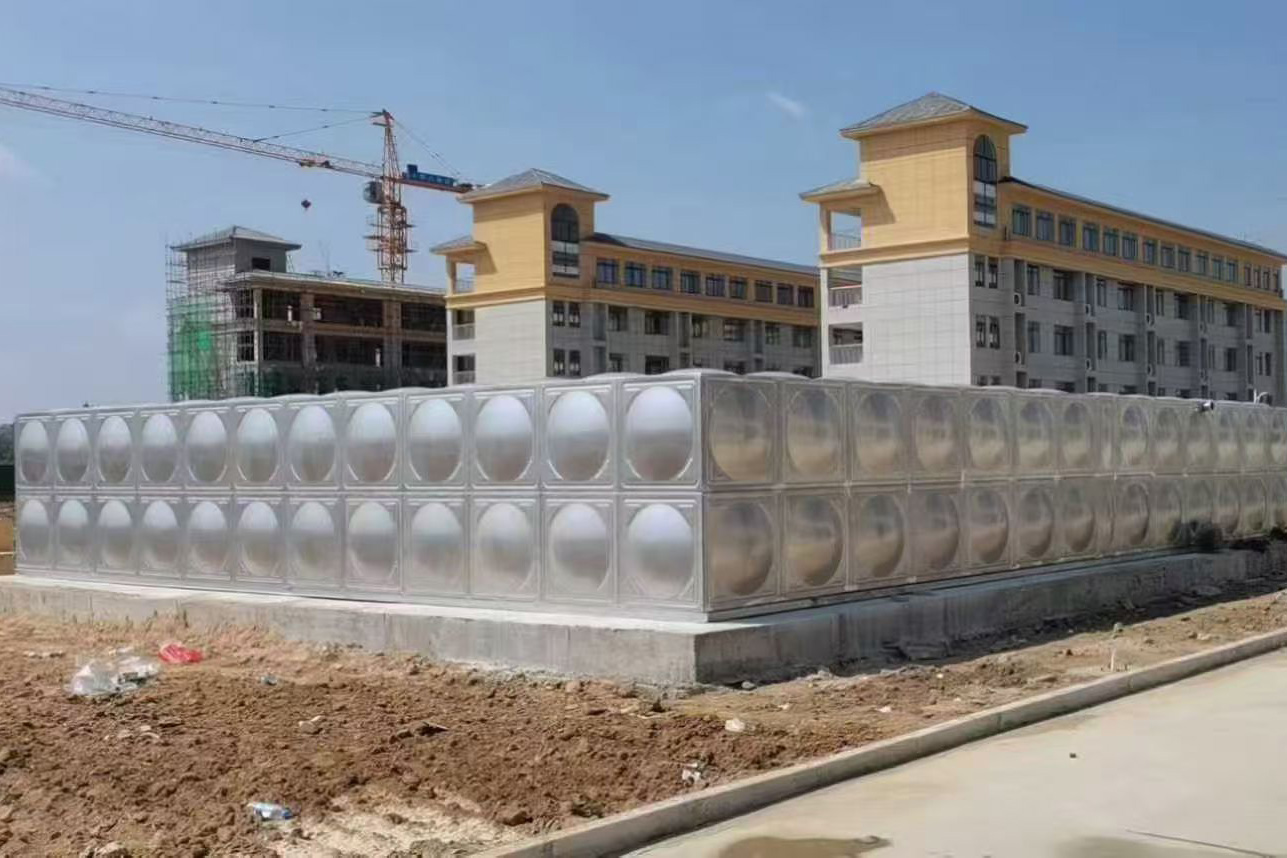
Provided high-capacity welded stainless reservoirs resistant to high-salinity ambient groundwater conditions.
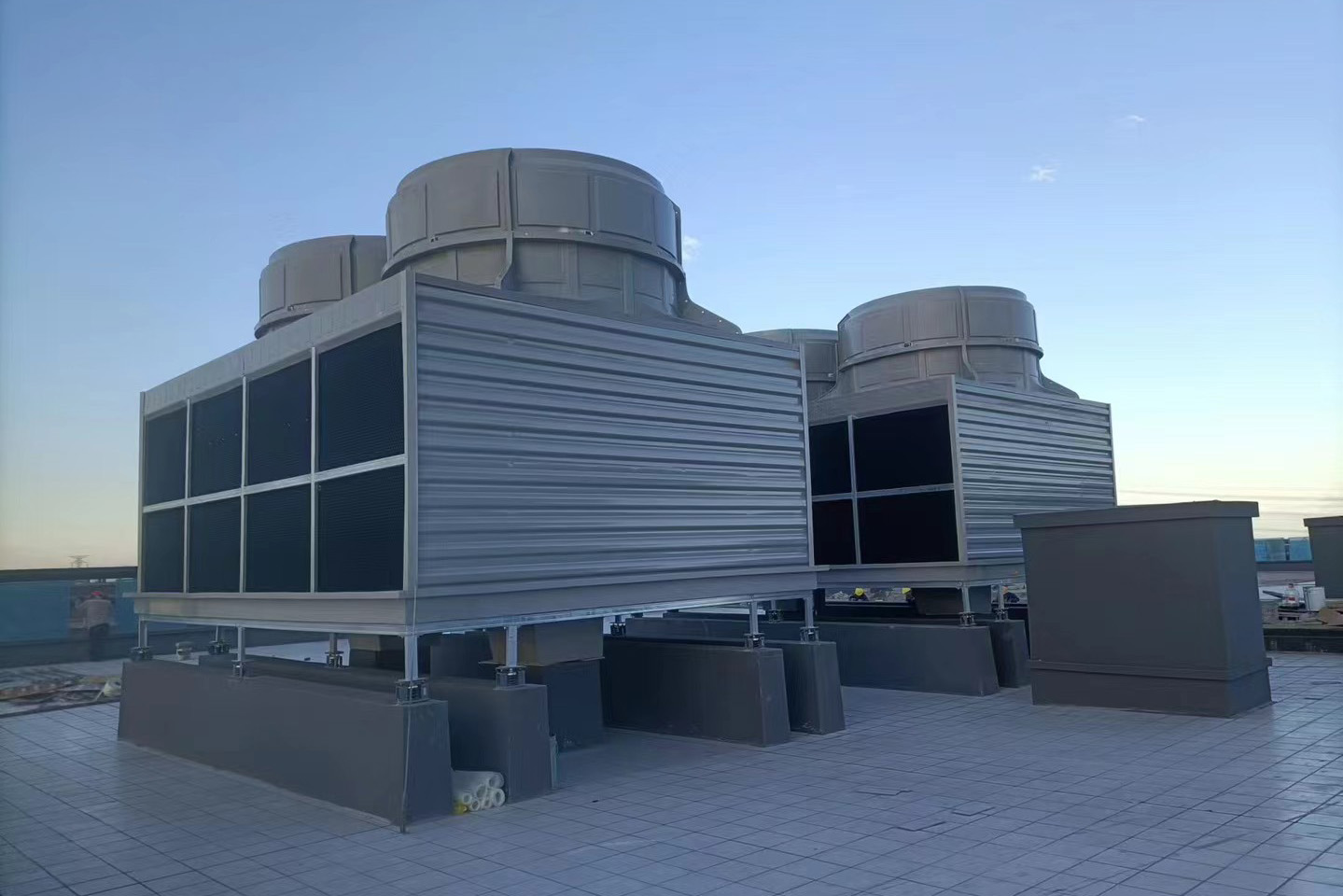
High-humidity tropical wet-bulb optimization ensuring uninterrupted cooling for continuous casting machinery.
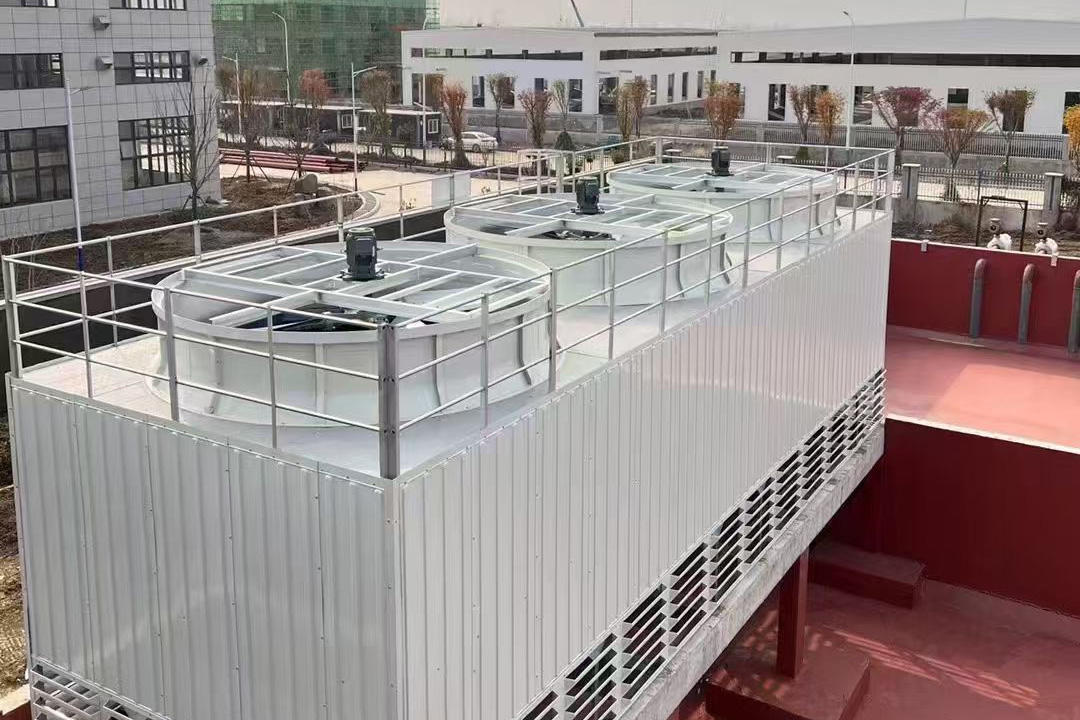
Zero-scaling closed loop design safeguarding primary smelting furnaces against thermal shock and tube rupture.
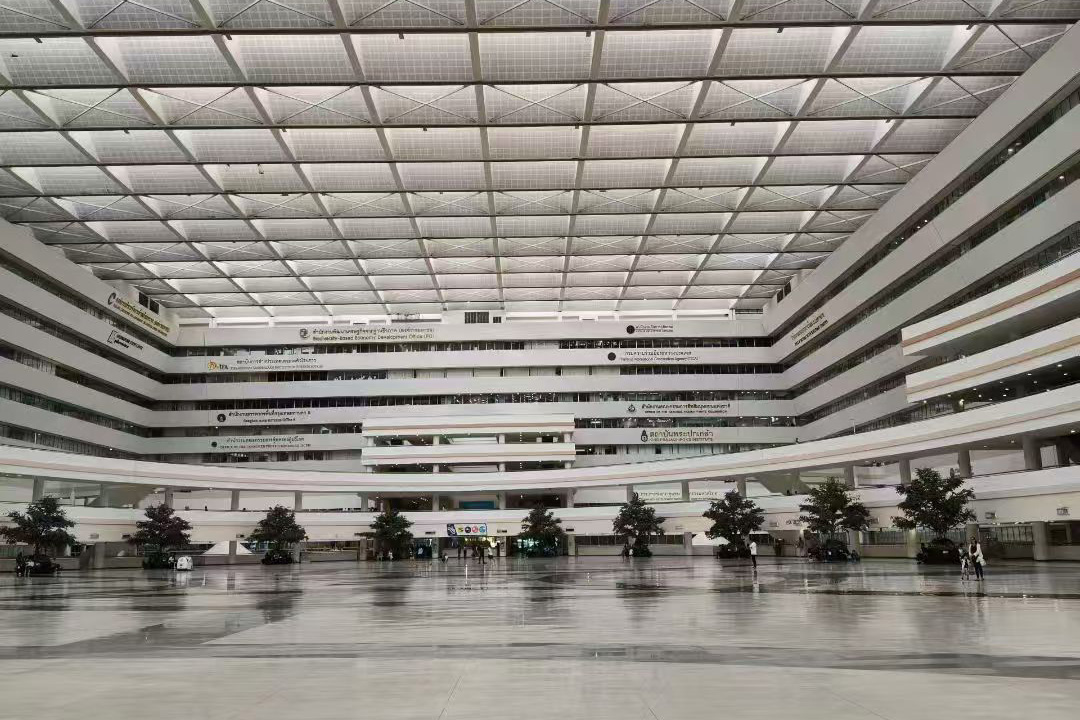
Integrated building life-safety and cooling supply meeting NFPA emergency smoke exhaust regulations.
Direct factory fabrication eliminates subcontractor markups while enforcing transparent quality protocols under ISO 9001 and international inspection agencies.
Fabrication aligns with CTI STD-201 (Cooling Technology Institute thermal certification protocols), GB/T 7190.1/2 national standards, and CE Machinery Directives. Every unit undergoes dynamic balance calibration (ISO 1940 Grade G2.5) for rotating impellers prior to export containerization.
Overseas clients frequently require independent third-party audits. We coordinate on-site verification with SGS, Bureau Veritas (BV), and TÜV Rheinland for hydrostatic coil testing, dye-penetrant weld inspections, and ultrasonic plate thickness verification before loading port clearance.
Located in Dezhou, Shandong—China's preeminent central HVAC and ventilation equipment industrial cluster. This ecosystem provides deep vertical integration: raw sheet metal processing, precision stamping, hot-dip galvanizing baths, and composite curing lines occur within a 20km radius, guaranteeing unbeatable supply chain lead times.
Shandong Fengdun's R&D trajectory for 2026-2030: decarbonization, zero visible vapor emissions, and digital-twin edge intelligence.
Developing secondary finned dry coils above the primary drift eliminators. By mixing warm saturated exit air with dry sensible air, the exhaust air dewpoint drops significantly, eliminating 100% of visible winter plume in urban districts and airports where atmospheric visibility is critical.
Embedding vibration transducers, ultrasonic basin scale sensors, and inlet/outlet delta-T thermistors into an edge controller. Algorithms continuously predict thermal fouling indices and trigger automatic chemical dosing, preventing Legionella formation and fan bearing breakdown before failures happen.
Re-engineering fill architecture to tolerate up to 8–10 Cycles of Concentration (CoC) utilizing advanced non-fouling ceramic and polymeric coatings. Reduces blowdown wastewater discharge volume by over 45% compared with conventional industrial cooling tower installations.
In-depth technical clarifications for mechanical engineers, MEP consultants, and global procurement managers.
Direct engagement with Shandong Fengdun's 12,000 m² factory eliminates third-party trading margins (typically 15%–30%) while establishing direct communication with mechanical design engineers. Custom nozzle pressures, non-standard footprint flanges, specific VFD motor ratings, and specialized sheet metal gauges are executed directly on our CNC press lines without communication loss or delay.
Evaporative cooling performance is governed by the entering ambient wet-bulb temperature (WBT), not the dry-bulb temperature. In regions like Southeast Asia, where ambient WBT can reach 28°C to 29°C, standard European or North American tower ratings will underperform severely. Fengdun recalculates thermal loading using the Merkel Equation: KaV/L = ∫ (dT / (hw - ha)), enlarging fill surface area and air velocity to achieve target 32°C leaving cold water temperatures without thermal shortfall.
SUS304 provides optimal tensile strength and food-grade safety for standard municipal drinking water and non-aggressive industrial processes where chloride concentrations stay below 200 ppm. SUS316 contains 2%–3% molybdenum, which elevates its Pitting Resistance Equivalent Number (PREN) significantly. SUS316 is required for coastal facilities within 5km of seawater, cooling loops with chlorination dosing exceeding 5 ppm, and chemical wastewater containment.
To deliver an exact technical datasheet, our engineering team requires:
Our cooling tower fans employ aerodynamically profiled aluminum alloy or FRP airfoils statically and dynamically balanced to ISO 1940 Grade G2.5 standards. The motor and reduction gearbox assemblies sit on heavy-gauge welded steel bases directly anchored to the main internal structural columns, preventing resonant harmonics and ensuring continuous bearing life exceeding L10 100,000 hours.
All equipment is packed for export in accordance with ISPM-15 phytosanitary regulations. Cooling tower coil bundles and motor assemblies are secured in steel-reinforced wooden cases with vapor-corrosion inhibitor (VCI) films. Tower shells and fan stacks are packed in knock-down (CKD/SKD) configurations inside 40ft High Cube containers, optimizing shipping volume and preventing transit distortion.
Direct factory pricing for EPC contractors, MEP consultants, and commercial facility managers worldwide.

