Engineered to precise load-bearing parameters, hydraulic efficiency thresholds, and high-tier environmental resistance for major international civil projects.








Rapid urban intensification, aggressive land valuation indices, and stricter urban fire defense standards across Europe, North America, Southeast Asia, and the Middle East have permanently disrupted conventional above-ground industrial liquid storage. Traditional reinforced cast-in-place concrete tanks suffer from persistent vulnerability: chronic micro-cracking due to seismic shifts, prolonged construction cycles of 6 to 14 months, labor-intensive curing protocols, and catastrophic structural failure when confronted with unexpected hydrostatic buoyancy forces.
In response, international engineering, procurement, and construction (EPC) conglomerates are pivoting toward prefabricated, ready-made underground water tanks. By pre-engineering heavy-gauge composite panels—incorporating food-grade austenitic stainless steels (SUS304, SUS316) or high-temperature fusion-bonded vitreous enamel steel plates over structural internal bracings—project owners achieve a massive 70% compression in installation timelines. Concurrently, burying the primary fire reserve or process water supply directly underneath vehicular parking complexes, green logistics parks, or manufacturing footprints liberates 100% of prime commercial real estate for revenue-generating operations.
Surface-mounted fire and drinking tanks tie up massive site footprints that could otherwise serve as logistical docks, retail zones, or landscaped green corridors. Prefabricated buried systems bear heavy traffic (HS-20 / BDM standards) directly above the tank ceiling slab.
Below-grade burial naturally utilizes the Earth’s thermal inertia. Liquid inventories remain stable without freeze-thaw degradation in sub-zero climates or algae blooming in tropical latitudes, dramatically slashing HVAC insulation and chemical biocide costs.
Unlike rigid concrete cisterns that shear and crack under lateral ground acceleration, modular stainless and composite steel water tanks leverage ductile high-tensile bolted or continuous-welded joints that absorb differential soil settlement and ground motion shocks.
Ready-made underground water tanks face drastically differing chemical, seismic, and hydraulic realities across continents. Below is our verified structural application framework.
In littoral industrial zones across Southeast Asia (Thailand, Indonesia, Vietnam) and the Gulf Cooperation Council (GCC), shallow brackish water tables aggressively corrode standard steel. Our solution integrates hot-dip galvanized external backings, anti-corrosive coal-tar epoxy isolation, and internal SUS316 plates with molybdenum alloying to completely halt chloride pitting.
Northern European and Central Asian applications require installation beneath active frost lines (1.8m to 3.0m). Our OEM ready-made tanks feature optional exterior polyurethane or elastomeric closed-cell foam thermal jackets, guaranteeing fluid readiness for emergency NFPA 22 fire suppression without requiring massive continuous electric immersion heaters.
Installed across Circum-Pacific seismic belts, these units incorporate internal diagonal tie-rods made of forged SUS304 along with flexible bellows expansion couplings at inlet/outlet penetration sleeves. When seismic shear waves strike, the modular tank shell flexes dynamically rather than tearing at rigid pipe anchor points.
Positioned beneath loading ramps and heavy trailer staging bays, these tanks are reinforced with heavy I-beam internal columns and box-ribbed module pressings capable of bearing continuous 40-ton tractor-trailer static and dynamic wheel stresses while holding 2,000+ cubic meters of combined fire and greywater reserves.
The most hazardous civil event for an underground water reservoir is the catastrophic buoyancy float-up effect during unexpected water table surges when the tank is emptied for mandatory triennial inspection. As a seasoned OEM manufacturer, Shandong Fengdun provides EPC contractors with certified buoyancy safety factor calculations:
Our modular underground tanks integrate extended bottom flange anchor lugs (wings) engineered directly into the perimeter baseplates. These perimeter wings secure the tank to the poured-in-place concrete ballast slab via grade 8.8 chemical anchor bolts, effectively utilizing the friction of surrounding compacted backfill soil to neutralize hydraulic uplift.
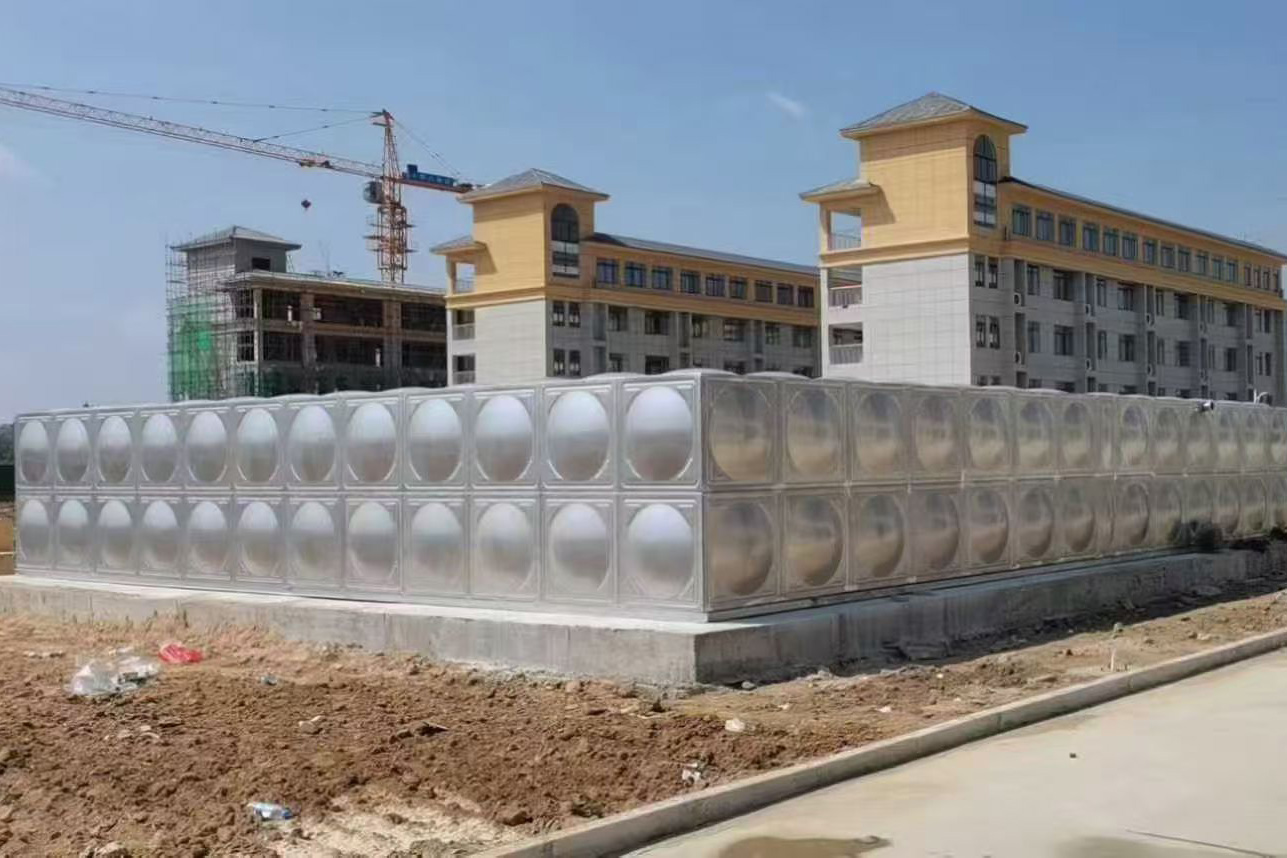 Field Installation: Anti-Buoyancy Anchored Base
How Shandong Fengdun leverages North China’s most dense sheet-metal and fluid-machinery ecosystem to deliver unmatched cost structure, rapid lead times, and certified quality.
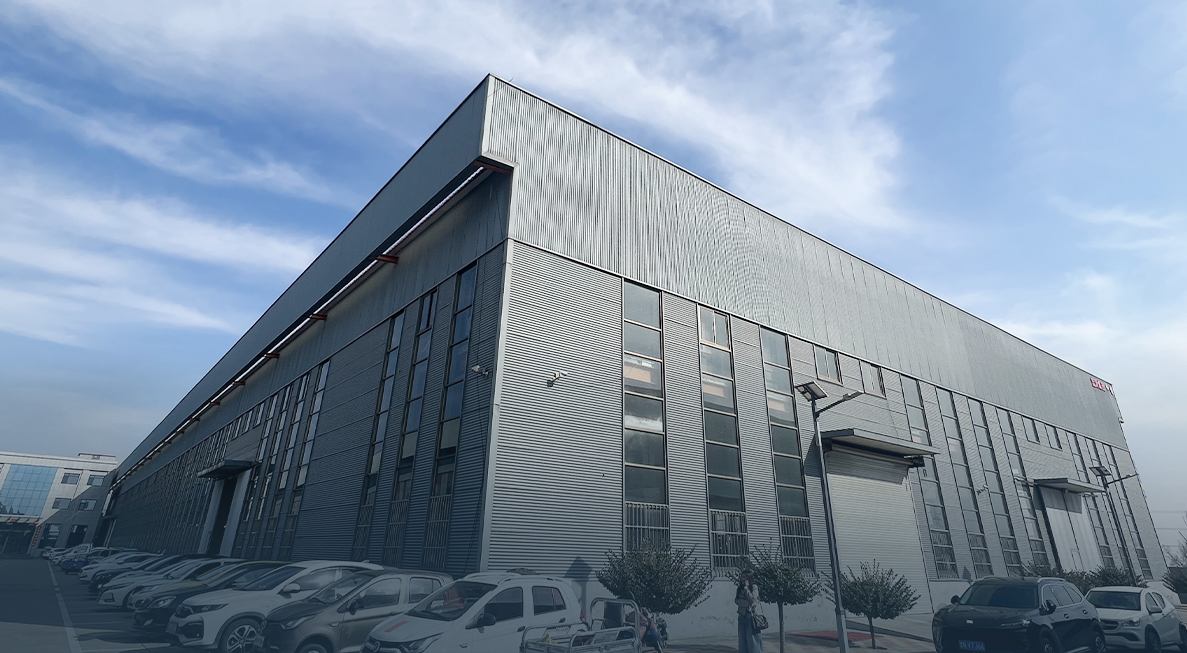 Dezhou Plant: 12,000 m² Dedicated Hydraulic Production
Dezhou, Shandong is widely celebrated as China's premier cluster for ventilation, heat exchange, and pressure vessel engineering. Being located in this epicentre allows Shandong Fengdun Environmental Technology Co., Ltd. to secure direct mill allocations of certified TiSCo and BaoSteel stainless steel coil (SUS304 / SUS316L) without speculative intermediary markups.
Our facility houses 2,500-ton hydraulic cold-press stamping lines, automated fiber-laser panel trimming beds, and continuous CNC plasma submerged-arc welding machines. Within 48 hours of design sign-off, raw sheet metal is converted into high-precision, dimensionally uniform 1000mm×1000mm, 1000mm×500mm, or 500mm×500mm modular standard panels.
Logistically, our close proximity to Qingdao Port and Tianjin Port affords streamlined containerized flat-rack or high-cube export shipping. Our container nesting architecture stacks panels with high geometric density, slashing ocean freight costs by up to 55% compared to shipping pre-welded cylindrical tanks.
| Performance Criteria | Fengdun Prefabricated Buried Tank | Traditional Cast-in-Place Concrete | Direct Buried FRP / GRP Shell |
|---|---|---|---|
| Installation Schedule (500m³) | 7 to 10 Working Days | 45 to 90 Days (Curing Bottleneck) | 12 to 18 Days |
| Seismic Shear Resistance | Excellent (High Ductility Steel Shell) | Poor (Brittle Microcracking Risks) | Moderate (Risk of Delamination) |
| Water Quality Potability | Certified Food-Grade (SUS304/SUS316) | Prone to Lime Leaching & Algae | Resin Styrene Migration Potential |
| Vehicle Load Bearing (HS-20) | Engineered Internal Heavy Columns | Requires Massive Reinforced Ceiling | Prone to Top Deflection Cracks |
| Anti-Buoyancy Anchoring | Integrated Outer Base Flange Lugs | Heavy Mass Reliance | Requires Extensive Geogrid Strapping |
| Service Life Expectancy | 40+ Years (Cathodically Protected) | 20-30 Years (Subject to Chemical Spalling) | 15-25 Years (Resin Embrittlement) |
Advancing beyond passive metal containment into intelligent, low-carbon, smart hydraulic infrastructure monitored in real-time.
Integrating embedded fiber-optic strain sensors along lower corner gussets and hydro-acoustic acoustic emission nodes. Real-time telemetry detects sub-millimeter foundation shifting, micro-leakage, or unusual hydrostatic surge pressures before failure occurs.
Transitioning from traditional bituminous exterior subterranean sealants to eco-friendly, zero-VOC waterborne graphene-polyurea composite coatings. Delivers 5,000+ hours of ASTM B117 salt spray resistance against aggressive soil nitrates and sulfur-reducing microbes.
Dynamic baffle engineering that divides subterranean volume into a dedicated, tamper-proof NFPA emergency fire reserve coupled with an active stormwater detention & slow-release infiltration chamber to assist sponge-city urban drainage regulations.
Overcoming the technical divergence between international codes (NFPA, British Standards, Australian Standards, and European Eurocodes) through certified engineering verification.
Our design office models tanks to satisfy NFPA 22 (Water Tanks for Private Fire Protection), BS EN 12845 (Fixed Firefighting Systems), AS 2304 (Water Storage Tanks for Fire Protection Systems), and GB 50974. Nozzle elevations, suction vortex inhibitors, and overflow capacities are engineered to conform precisely to your local jurisdiction's hydraulic authority.
Each modular panel profile undergoes precise geometric coordinate validation. On welded buried configurations, all weld seams undergo 100% dye-penetrant (PT) inspection and vacuum bubble testing prior to dispatch. Pre-shipment batch testing is routinely monitored by independent agencies including SGS, Bureau Veritas (BV), and TÜV Rheinland.
Export shipments include complete 3D isometric assembly blueprints, step-by-step video installation sequences, high-grade torque wrenches, custom EPDM gasket rolls, and color-coded structural tie-rod connectors. Remote digital engineering oversight ensures contractor workcrews achieve seamless, leak-proof commissioning on the first hydro-fill.
In-depth technical answers resolving critical structural, corrosion, hydraulic, and logistical considerations.
Our ready-made tanks utilize a modular box-ribbed (spherical convex) module geometry pressed under a 2,500-ton hydraulic die. This curvature dramatically raises the panel’s section modulus and moment of inertia. Furthermore, the tank’s interior is reinforced with a three-dimensional spatial truss framework constructed from heavy-gauge hot-dip galvanized structural steel or SUS304 box-columns and diagonal stay-rods spaced at exact 1.0m intervals. This structural matrix distributes lateral active Rankine earth pressures and hydrostatic groundwater pressures evenly throughout the internal skeleton, preventing sidewall buckling even under dry-tank, maximum-groundwater-table conditions.
Material selection is dictated by water chemistry, chloride concentration, and ground corrosivity. SUS304 is the preferred food-grade choice for potable drinking water and municipal fire reserves where chloride levels remain below 200 mg/L. Where groundwater or stored water contains elevated chlorides (200 to 1,000 mg/L), coastal sea spray, or chemical runoff, SUS316 is mandatory because its 2-3% molybdenum content creates a self-healing passive chromium oxide film that resists chloride pitting corrosion. Enamel Steel (vitreous enamel fused to steel at 850°C-900°C) is ideal for aggressive industrial process water, wastewater, or high-alkalinity storage, offering an inert glass shield impervious to pH extremes from 2 to 12.
The foundation requires a cast-in-place reinforced concrete slab engineered to the project’s specific bearing capacity (typically 150 to 250 kPa), finished to a tolerance of within ±5mm across the span. Once the tank is assembled, anchor-bolted, and successfully passes its 24-to-48 hour hydrostatic leak test, backfilling must proceed symmetrically in 300mm lifts. Backfill material should consist of non-cohesive granular sand, fine gravel, or 2:8 cement-stabilized soil free from large rocks (>25mm) or construction debris. Backfill must be mechanically compacted to a dry density of at least 95% Standard Proctor density to prevent uneven differential soil settlement.
For subterranean composite modular tanks, we employ a dual-barrier protection approach: First, the external panel faces are sealed with a multi-coat high-build bituminous primer or thick polyurea elastomer membrane to insulate the steel from soil electrolyte contact. Second, for projects located near electrified mass transit, industrial substations, or highly conductive soils, we engineer sacrificial magnesium or zinc anode cathodic protection systems (or impressed current cathodic protection - ICCP). The tank’s grounding network is bonded to ensure electrical continuity with a resistance to ground of under 4.0 Ohms, suppressing galvanic pitting throughout its 40-year design life.
Yes. During OEM order engineering, clients specify the intended surface application: light landscape pedestrian cover (earth cover: 500mm-1000mm, load: 5-10 kN/m²), regular vehicle parking (earth cover: 800mm-1500mm, load: 15-20 kN/m²), or heavy fire-engine/trailer access (earth cover: 1000mm-2000mm, compliant with HS-20/HS-25 standards). Our structural engineers adjust internal column cross-sections, ceiling panel plate thicknesses (up to 4.0mm), and roof beam spacing accordingly, furnishing full FEA stress analysis models and structural calculation sheets for local building council approval.
Standard OEM production ranges from 12 to 20 calendar days for capacities between 100m³ and 1,500m³. The modular panels are securely bundled with protective PE foam interleaving, secured with high-tensile steel strapping on fumigated wooden or heavy steel skids. Fasteners, internal stay rods, and accessories are crated in seaworthy, moisture-barrier wooden cases. One standard 40-foot High Cube (40HQ) container can accommodate up to 600m³ to 800m³ of disassembled modular tank capacity, minimizing ocean freight expenditure per cubic meter of stored liquid volume.
Factory-direct systems built under strict ISO 9001 and CE frameworks, engineered for long-term integration in turnkey commercial, industrial, and municipal projects.


Submit your project parameters—volume requirement (m³), live surface loads (pedestrian, HS-20, or HS-25), groundwater table level, and medium characteristics. Our engineering department furnishes complete structural calculation reports, 3D CAD step models, and factory-direct quotation within 24 hours.
